
How Can Production Assistants Handle Last-Minute Set Supply Requests?
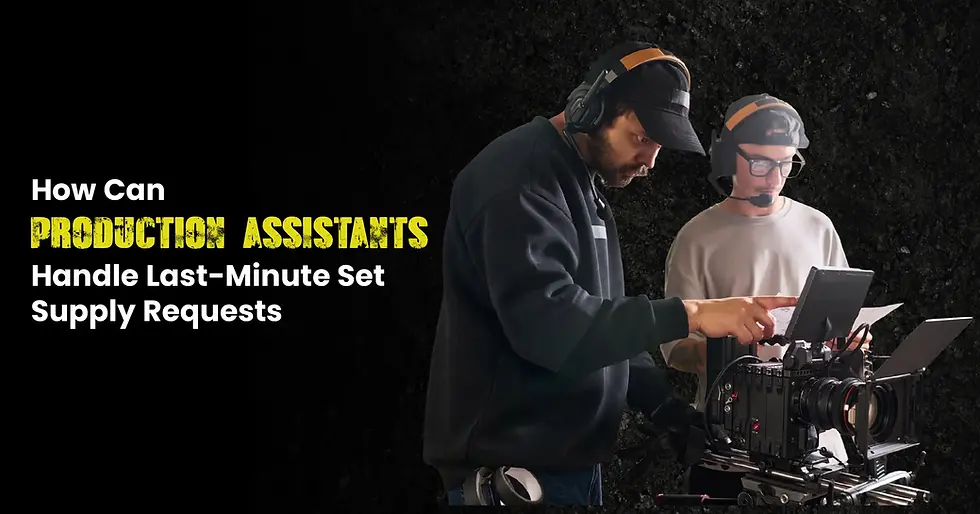
Every production assistant knows the moment. It's 7:40 a.m., the first shot is in forty minutes, and the director of photography leans over and says the diffusion frames are missing, or the art department needs a case of gaff tape right now, or a client has just asked for a different prop on the table. Nobody planned for it, and everybody now looks at you.
Last-minute requests aren't a sign that someone failed. They are a normal part of film, TV, and commercial work. Scripts change, locations shift, weather interferes, and creative decisions get made on the day. What separates a smooth set from a stalled one is how quickly the production assistant can turn a vague "we need this now" into supplies in someone's hands.
This guide covers practical ways PAs can handle those moments calmly, spend the budget wisely, and keep the crew working.
Why Last-Minute Supply Requests Happen So Often
It helps to understand why the scramble happens, because the cause often tells you how to respond.
Creative changes on the day. A director sees the location in real light and decides the scene needs something different. That could mean extra bounce boards, a different practical lamp, or more flags to control spill.
Underestimated consumables. Gaff tape, clamps, sandbags, batteries, zip ties, and cable covers vanish faster than anyone predicts. A long shoot day can burn through a week's worth in an afternoon.
Location surprises. A venue may not allow certain equipment, a loading area may be farther away than expected, or the power situation may be different from the tech scout notes.
Schedule compression. When a company falls behind, crews often add extra setups to catch up, and that creates new demands for equipment and supplies.
Client input on commercial sets. On commercial shoots in particular, agency and brand representatives often ask for changes after seeing the monitor, which can mean new wardrobe pieces, set dressing, or product-related items.
Knowing these patterns lets a PA anticipate many requests before they are spoken, which is the strongest skill in this job.
Step 1: Get the Request Clear Before You Move
The fastest way to waste time is to run off with half the information. When a department head gives you an urgent request, spend thirty seconds confirming the essentials:
• What exactly is needed? Get brand, size, quantity, and color where it matters. "A few C-stands" and "four 40-inch C-stands with arms" lead to very different trips.
• When is it needed? Ask for the real deadline, not the emotional one. "Now" often means "before the next setup," which may give you a bit more room.
• Who approves the spend? Know whether you can purchase it, or whether the production coordinator or line producer must sign off first.
• Is a substitute acceptable? Sometimes a close alternative works, and that can open up faster options.
• Where should it be delivered? On a large lot or a multi-location day, "on set" can mean several places.
Write the answers down. Repeat them back to the person asking. A short confirmation prevents the most common failure in urgent errands: coming back with the wrong thing.
Step 2: Check What You Already Have
Before anyone leaves the location, look inside. Check the production office, the art and grip trucks, the craft services area, and the base camp. Ask the coordinator whether any returns are due that might hold what you need.
On many shoots, the missing item is already somewhere in the building. A quick message to the other department leads can save you an hour-long run. If a department has extra stock, ask whether it can be borrowed and returned, and make a note so it gets logged properly.
Step 3: Decide Whether to Source Locally or Use a Delivery Partner
Once you know what's needed and that you don't have it, you have two main choices: send someone out, or have the supplies brought to you.
Sending a PA out works well for small, simple purchases that sit close to the location. The cost is that you lose a person from set. If you only have a few PAs, every errand takes a set of hands away from lockups, crowd control, and walkie duty.
Using a production supplies delivery service makes more sense when the order is larger, the items are specialized, the location is remote or congested, or the crew cannot afford to lose people. A dedicated emergency production supply delivery option keeps your team on set while someone else handles the transport. This is especially useful in dense urban areas, where traffic, parking, and loading restrictions can turn a ten-minute errand into a ninety-minute one.
A good rule of thumb: if the round trip would take a PA away for more than forty-five minutes, or if the run requires multiple stops, look at a delivery option first.
Step 4: Build a Quick Comparison in Your Head
When time is tight, compare your choices on three things:
1. Speed. How soon can it realistically arrive, accounting for traffic and loading?
2. Cost. What is the total, including fuel, parking, delivery fees, and any rental or restocking charges?
3. Reliability. Is the source known to have the exact item and the right quantity?
The cheapest option is not always the lowest-cost one. A bargain that arrives late and holds up forty crew members costs far more than a delivery fee. Producers think in terms of crew time, so frame your recommendation that way: "This costs a little more but gets us rolling twenty minutes sooner."
Step 5: Keep a Running Log of Requests and Receipts
Urgent purchases are where paperwork usually breaks down. In the rush, receipts get lost, and nobody remembers who authorized what. Protect yourself and the production:
• Photograph every receipt immediately.
• Note which department the expense belongs to.
• Record who approved it and what time.
• Keep a short list of items that were purchased, rented, or borrowed so returns don't get missed.
Accountants and coordinators will thank you. Clean records also help the production understand what keeps running short, so future shoots can be better prepared.
Step 6: Build a Go-To Kit of On-Set Production Supplies
The best response to a last-minute request is already having it. Many experienced PAs keep a compact bag or bin stocked with the items most often needed in a crisis. Consider including:
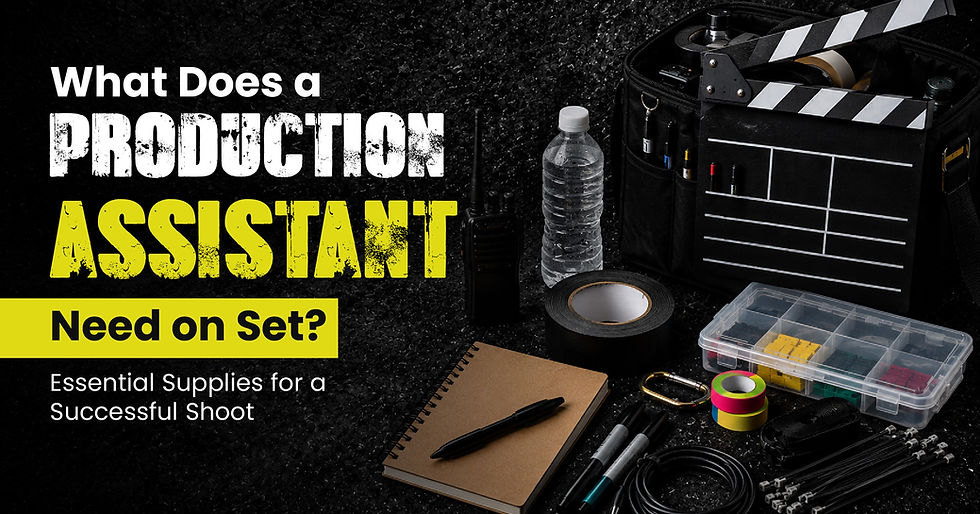
• Gaff tape in black and white, plus spike tape
• Clothespins and A-clamps
• Zip ties and bungee cords
• Extension cords and power strips
• Batteries in common sizes
• Sharpies, markers, and notepads
• Safety pins, scissors, and a utility knife
• Basic first-aid items
• Trash bags, wipes, and paper towels
• Cable ramps or cover for walkways
Having these on-set production supplies within arm's reach turns many "emergencies" into thirty-second fixes. It also makes you the person the crew trusts, and that matters for your next job.
Step 7: Communicate Early and Often
Nothing frustrates a department head more than silence. When you take an urgent request, tell them what you are doing and when to expect it. If something changes, update them right away.
Good phrases to use on set:
• "I've confirmed the order, and it should arrive in about thirty minutes."
• "They don't have that exact size. I can get the next size up. Is that okay?"
• "I'm checking two options and will confirm in five minutes."
Short, clear updates let the assistant director adjust the schedule, and they let the crew plan their time. This is also where strong film crew support services shine: a reliable partner will keep you informed on arrival times so you can pass accurate information along.
Step 8: Plan for Commercial Production Supplies Differently
Commercial work moves fast and carries high expectations. Clients are paying for polish, so the tolerance for visible mistakes is low. A few special points for these shoots:
• Product-related items often must match precise specifications. Confirm with the brand representative before buying.
• Packaging and branding may need to be hidden or shown in specific ways, so ask about restrictions before you remove labels or swap items.
• Approvals are layered. The agency, the client, and the director may all weigh in, so find out who has final say.
• Quantities add up. Multiple takes and multiple setups mean you may need duplicates of consumable props or set pieces.
Keeping a list of reliable vendors for commercial production supplies saves time when a client suddenly wants an alternative on set.
Step 9: Learn From Every Scramble
After the wrap, take a few minutes to review what went wrong and what went right. Talk with the production coordinator or key department heads:
• Which items ran out, and why?
• Could this have been predicted from the call sheet or tech scout?
• Which vendors or services were fast and reliable?
• What should be added to the standard kit next time?
This habit turns chaos into process. Over time, you will anticipate requests before they happen, and that is the difference between a PA who survives the day and one who gets rehired.
Common Mistakes to Avoid
Leaving without confirming details. The wrong item wastes everyone's time.
• Overpromising on timing. It's better to give a realistic estimate than to be late.
• Ignoring parking and loading rules. Tickets, tows, and blocked access create new emergencies.
• Forgetting about returns. Rentals and borrowed items need to go back, or they become costly.
• Not asking for help. If the request is bigger than you can handle, tell the coordinator early.
Why Logistics Support Matters More Than Ever
Production schedules keep getting tighter, and budgets don't leave room for idle crews. That is why many productions rely on dedicated production logistics services to supplement their PA teams. Trucks, equipment, consumables, and fast delivery all need to be coordinated, and doing it well takes experience. When PAs have a dependable partner for last-minute production supplies, they can spend less time driving and more time keeping the set organized.
Final Thoughts
Handling last-minute set supply requests isn't about heroics. It's about asking the right questions, using what's already on hand, choosing the right way to source the item, documenting everything, and communicating clearly. A prepared PA with a good kit, a clear head, and reliable partners can solve most urgent problems before the director has time to worry.
Your Partner for Fast Set Support in Los Angeles
When a request can't wait, PA Nation Supplies is built to help. Founded in 2018 by crew veteran Carlos Flores and run by people who have worked on set, PA Nation rents production trucks and production supplies and offers on-set services that prevent delays and protect your budget. From film set supply delivery to emergency production supply delivery, the team understands the pressure of a ticking call sheet because they've lived it. Serving productions across the Los Angeles area, PA Nation Supplies is located at 8962 Ellis Ave, Los Angeles, CA 90034. Call 818-636-3541 to talk with a team that speaks your language and keeps your crew moving.
FAQs
1. What are last-minute production supplies?
They are items a crew needs unexpectedly on the day, such as tape, clamps, batteries, cables, or set dressing that wasn't ordered in advance.
2. How fast can a film set supply delivery arrive?
Timing depends on traffic, location, and item availability. A local production supplies delivery service can often get items to set far faster than sending a PA out.
3. When should I use emergency production supply delivery?
Use it when the item is needed quickly, the errand would take a PA off set for too long, or the order involves several stops or heavy gear.
4. What counts as on-set production supplies?
Common examples include gaff tape, extension cords, sandbags, cable ramps, safety items, and other consumables that keep the crew working.
5. Do production logistics services help with commercial shoots?
Yes. Commercial production supplies often need exact specifications and quick turnarounds, and logistics partners and film crew support services can handle both.
Comments